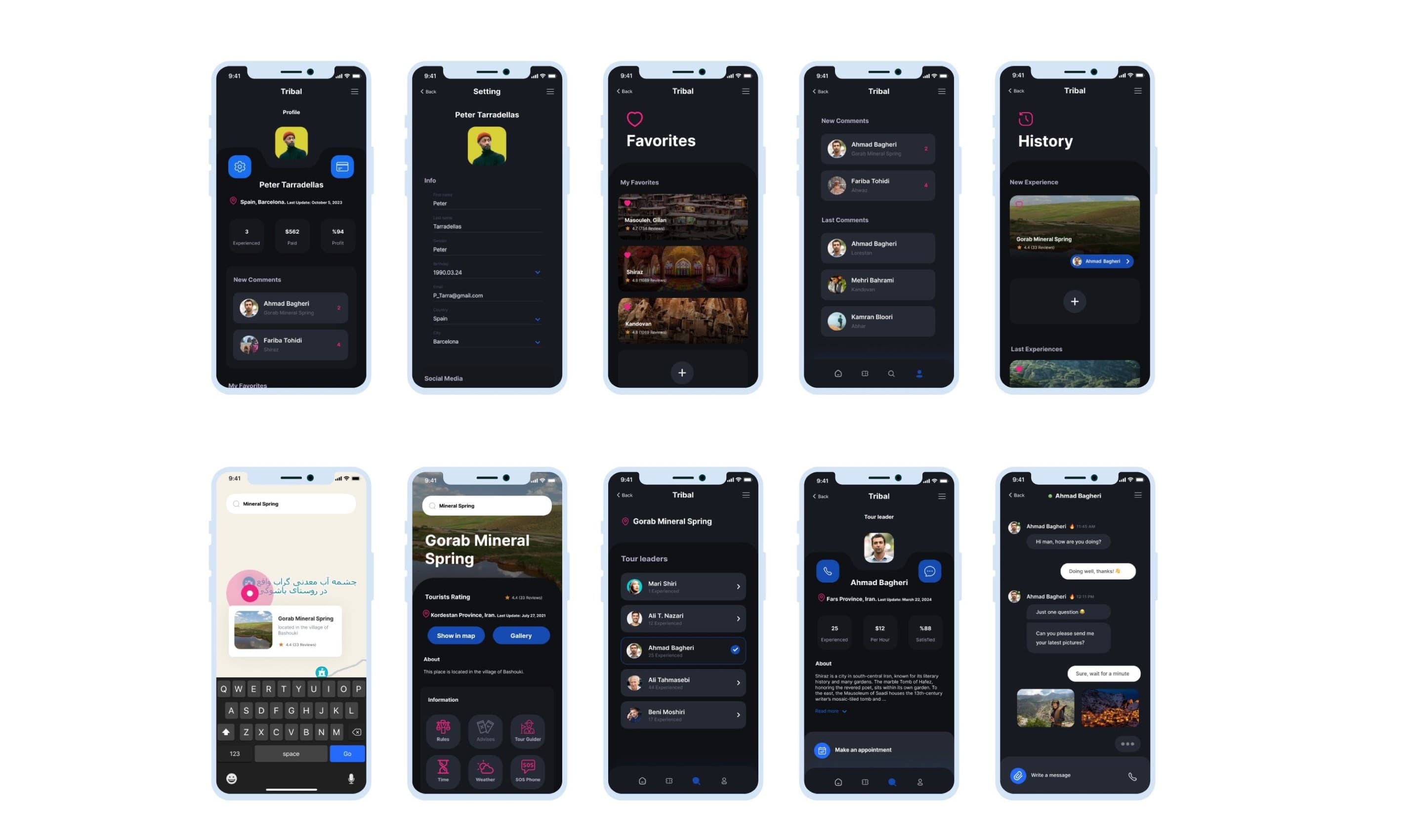
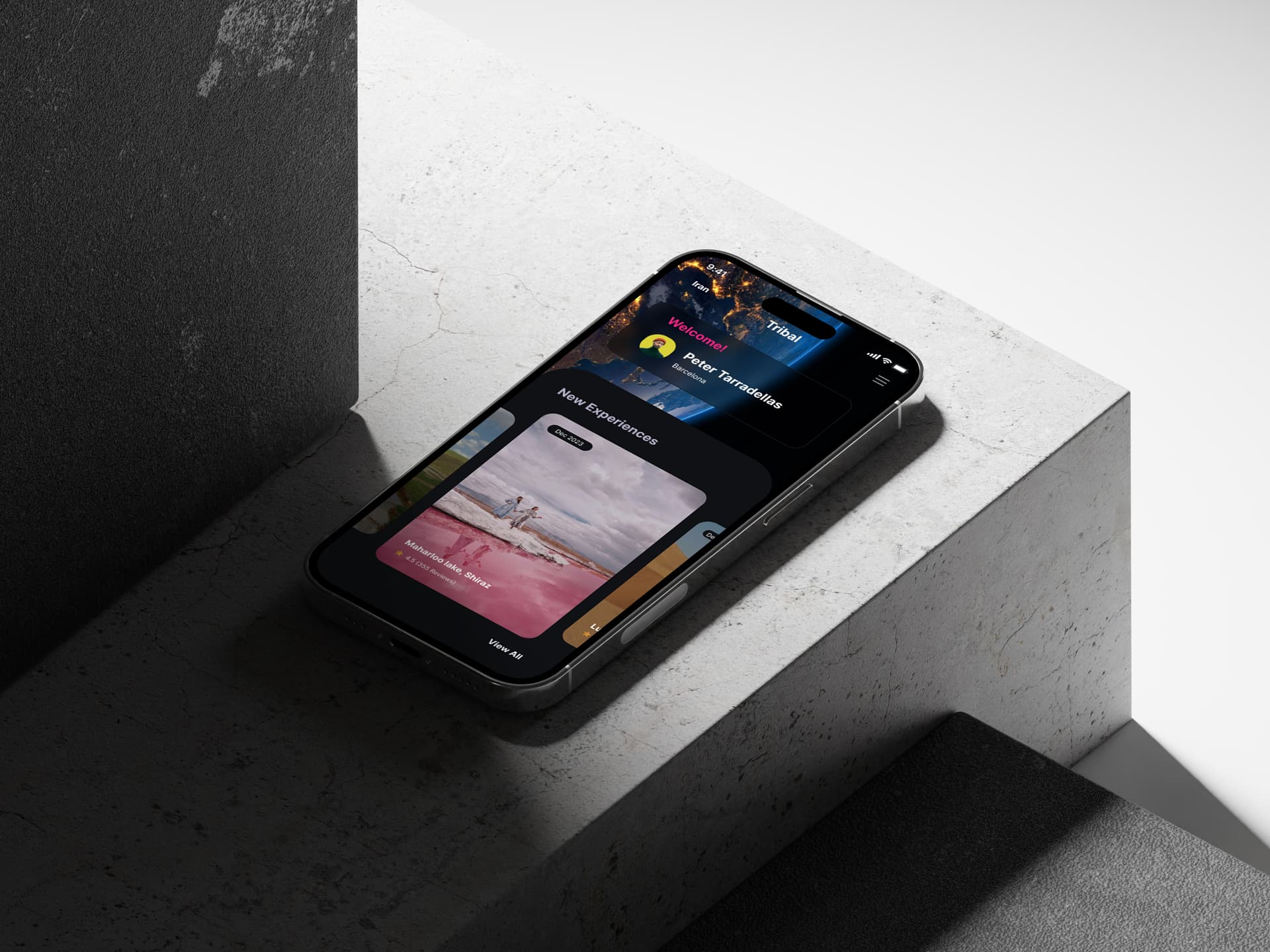
Introduction
Traveling to Middle Eastern countries, including Iran, is often filled with unforeseen challenges for people worldwide. In most cases, the lack of access to reliable local and regional resources hinders decision-making. Unfamiliarity with these local cultures before the trip can lead to significant financial and time losses for any traveler.
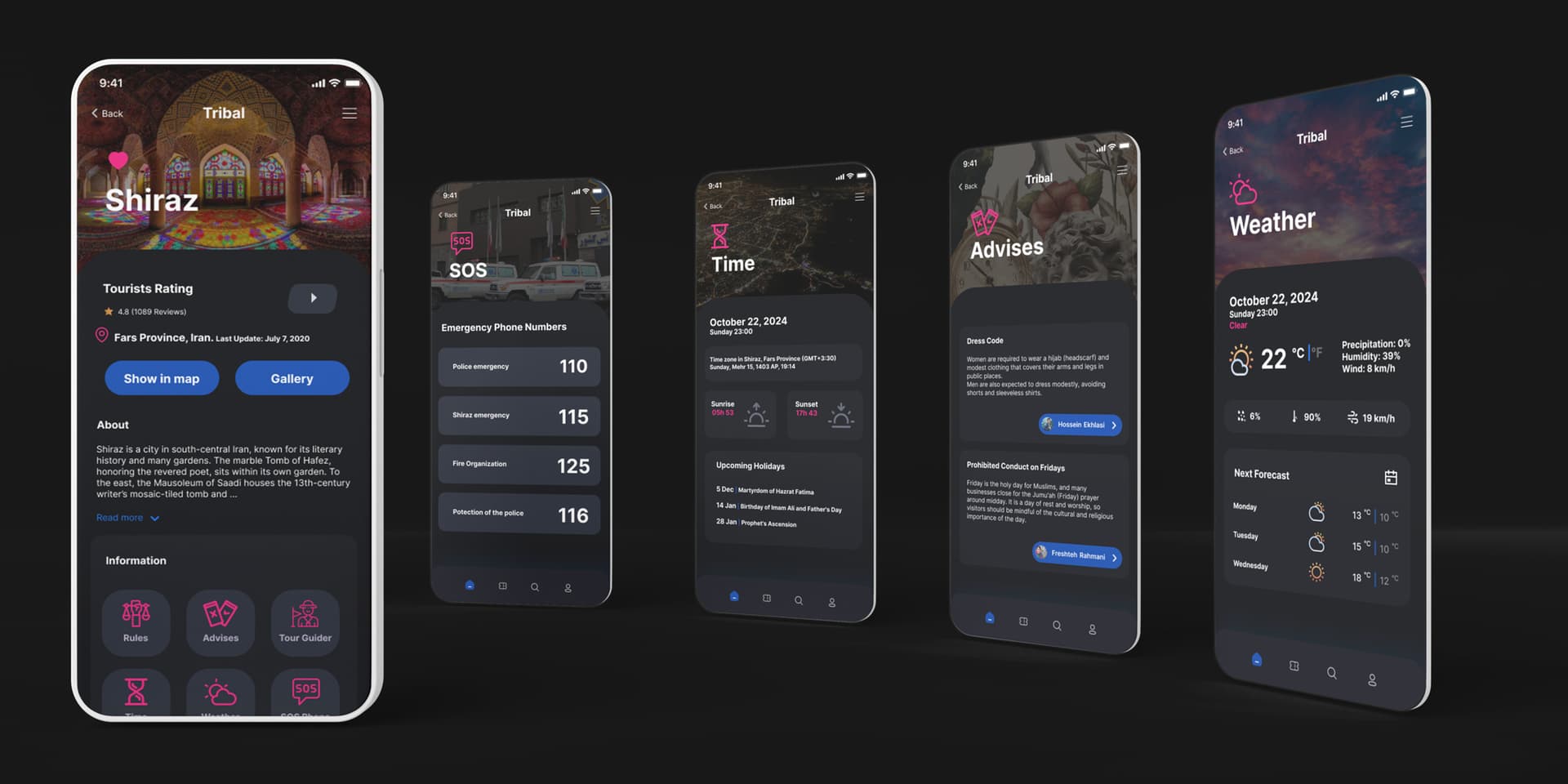
In this regard, cultural customs are sometimes more important than the laws of the countries. Additionally, access to up-to-date images and information about tourist destinations allows for better trip planning. This application provides access to local customs and national laws, contact information for tour guides, exchange rates, important and safe locations, reviews of historical sites, and emergency numbers for the destination country.
Product
Application
What I did
Logo design
User research & testing
UI Design
UX Design
My Role
UX Researcher, UI/UX designer
Tools
Figma, Figma jam, Adobe Photoshop, Adobe Illustrator
Timeline
Q4 2022 - Q4 2024
Problem
The lack of decent work opportunities and economic investment in many Middle Eastern countries, particularly in small towns and rural areas, has contributed to economic stagnation and social challenges, leading to migration away from these regions. This project aims to address these issues by promoting eco-tourism as a sustainable solution. The proposed app focuses on creating job opportunities within local communities by encouraging environmentally friendly and culturally immersive tourism.
By connecting tourists with local guides, preserving ecosystems, and showcasing cultural heritage, the app fosters economic growth and social integration, empowering local populations and supporting reverse migration.
Our Principle
This project began with a focus on one of the United Nations' key goals: Decent work and economic growth. According to the UN, "Decent work means opportunities for everyone to engage in productive work that provides a fair income, workplace security, and social protection for families, along with better prospects for personal development and social integration." A continued lack of decent work opportunities, insufficient investment, and under-consumption lead to the erosion of the fundamental social contract that underpins democratic societies: the idea that everyone should benefit from progress.
Our Criteria
Attracting international financial resources
Focus on eco-tourism
Offering consultation and access to local information for foreign tourists before their trip
Building trust and a sense of security for foreign tourists traveling to Iran
Establishing direct communication between local guides and foreign tourists
A reference for expanding and producing accurate and up-to-date tourism information
Providing access to information in English for foreign tourists about Iran
Helping to provide more job opportunities and income generation in small towns and villages
Design Process
The design process for this project consists of three main phases, moving from left to right: Understand, Explore, and Build. Each of these phases is divided into two sub-phases, which gradually guide the design toward its completion and final outcome.
This process is iterative, meaning that to achieve a satisfactory result and create a product that aligns as closely as possible with user needs, revisiting earlier stages and re-evaluating the design is inevitable. This approach not only allows for continuous improvement but also enables the identification and optimization of weaknesses, ensuring the final product meets user expectations and requirements.
This model is derived from the Double Diamond framework, which consolidates these six stages into four key phases: Discover, Define, Develop, and Deliver.
Persona

Max Thompson
- Age
- 28
- Gender
- Male
- Occupation
- Software Engineer
- Family status
- Single
- Location
- Berlin, Germany
- Travel Style
- Adventure & Culture Seeker
Personality
Quote
“I want to explore Iran's rich history and culture, but I need to be fully prepared. Knowing where to go, whom to trust, and what to expect would help me feel at ease.”
Background
Max has always loved traveling to culturally rich and historically significant places. With a preference for destinations that offer unique experiences and lesser-known sites, he has traveled throughout Europe and Southeast Asia. He now wants to explore Middle Eastern countries, specifically Iran, because of its unique culture, ancient history, and breathtaking landscapes. However, Max is wary of travel challenges in unfamiliar regions.
Goals
- Explore Iran's Cultural and Historical Sites: Max wants to visit places like Persepolis, Shiraz, and Yazd and gain insights into the local culture.
- Find Reliable Local Information: Max is interested in understanding local customs, safety tips, and cultural norms to avoid misunderstandings or unintentional offenses.
- Plan a Safe & Well-Informed Trip: He aims to ensure his safety and minimize confusion by gathering as much reliable information about Iran as possible.
Challenges / Frustrations
- Limited Reliable Information: Max has difficulty finding up-to-date, trustworthy travel information specific to Iran, especially regarding cultural etiquette and safe practices.
- Safety Concerns: Due to media portrayals, he feels uncertain about safety and needs clarity on where to go and whom to trust.
- Language Barrier: Although English is widely spoken in some places, Max worries about communicating with locals and accessing reliable guides.
Preferred Sources of Information
- Travel Apps and Localized Platforms: Max looks for apps that offer localized insights into tourist destinations, cultural norms, and insider tips.
- Trusted Blogs & Travel Forums: He frequently reads blogs from travelers with firsthand experience in the Middle East and participates in travel forums.
- Official Tourism Websites & Safety Advisories: Max refers to official tourism sites for Iran and closely follows travel advisories for up-to-date information.
User Flow
Brand Identity
Logo: Structure & Idea
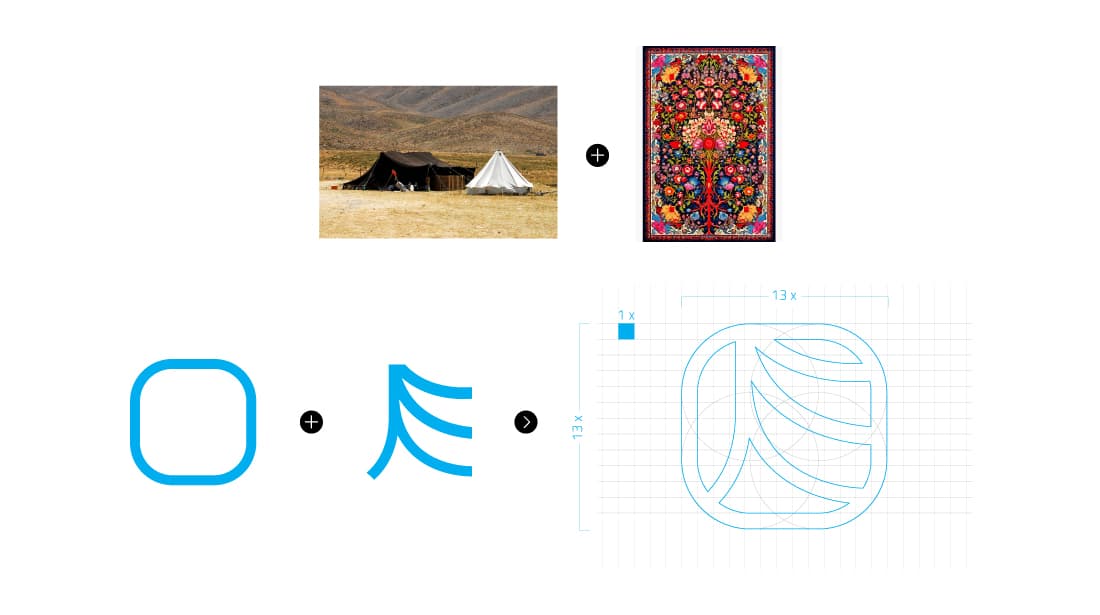
Iranian designs are rich with curved lines and shapes, often abstracted from nature, especially flowers. This logo, inspired by traditional carpet patterns, has been created in a minimalist style. It represents a sprout enclosed within a square frame, resembling a tile.
Logo: Color
The logo design features two traditional Iranian colors: Persian Red, inspired by the Iranian rose, and Persian Blue, drawn from the tilework of Iranian mosques. Three shades of gray are used for the typography and surrounding elements to maintain a neutral tone, enhancing the clarity and focus on the form.
Application
Primary Colors
G: 57
B: 187
Hex: #1C39BB
G: 40
B: 162
Hex: #FE28A2
G: 26
B: 34
Hex: #181A22
Secondary Colors
G: 17
B: 20
Hex: #0F1114
G: 42
B: 53
Hex: #252A35
G: 98
B: 114
Hex: #5E6272
G: 173
B: 198
Hex: #BAADC6
A B C D E F G H I J K L M N O P Q R S T U V
W X Y Z
1 2 3 4 5 6 7 8 9 0
A B C D E F G H I J K L M N O P Q R S T U V
W X Y Z
1 2 3 4 5 6 7 8 9 0
A B C D E F G H I J K L M N O P Q R S T U V
W X Y Z
1 2 3 4 5 6 7 8 9 0
A B C D E F G H I J K L M N O P Q R S T U V
W X Y Z
1 2 3 4 5 6 7 8 9 0
A B C D E F G H I J K L M N O P Q R S T U V
W X Y Z
1 2 3 4 5 6 7 8 9 0
A B C D E F G H I J K L M N O P Q R S T U V
W X Y Z
1 2 3 4 5 6 7 8 9 0
First Sample of Design
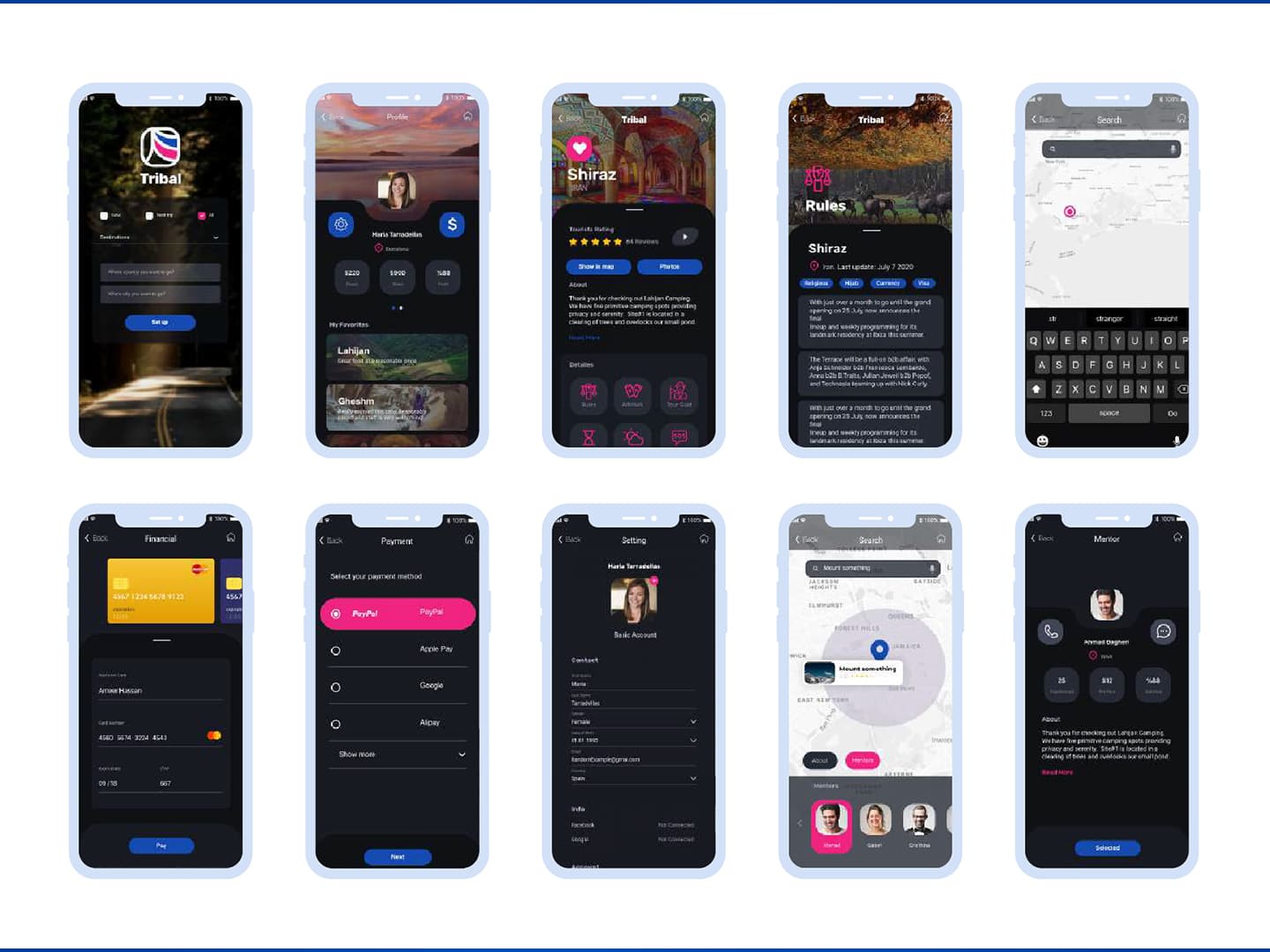
The design process for this project consists of three main phases, moving from left to right: Understand, Explore, and Build. Each of these phases is divided into two sub-phases, which gradually guide the design toward its completion and final outcome.
Redesign
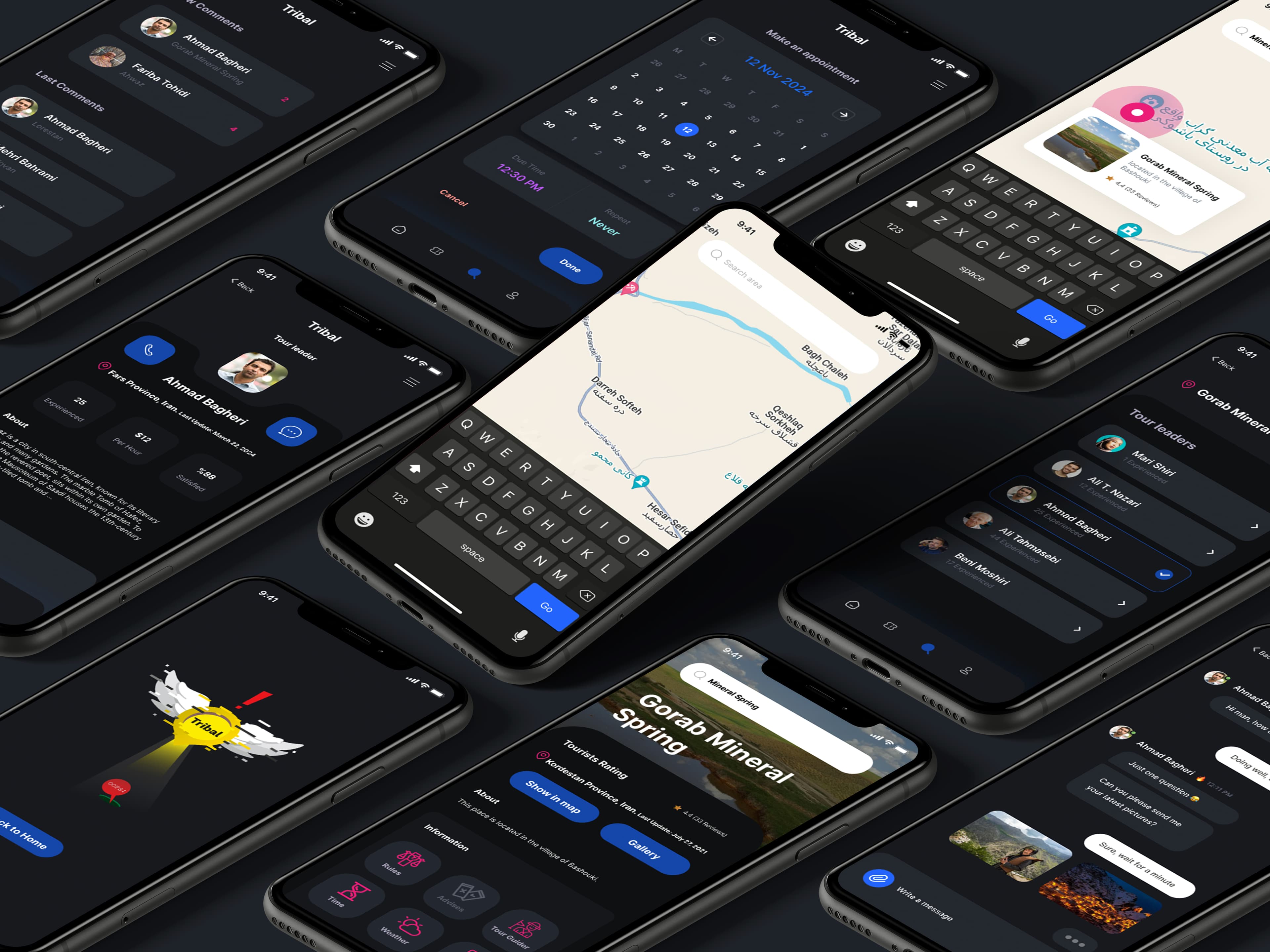
Initially, a comprehensive usability test was conducted to thoroughly evaluate the user experience. At the same time, all pages were meticulously examined for accessibility and potential coding issues that might arise in the future.
The color codes were optimized to enhance clarity and ensure design consistency, while static images on the pages were replaced with new visuals that align with the design objectives.
To further improve user accessibility, a menu featuring four icons was added to the bottom of the page. Lastly, the design of the intermediate pages was completed to ensure that navigation within the application is both optimized and user-friendly.
Color Blindness Test
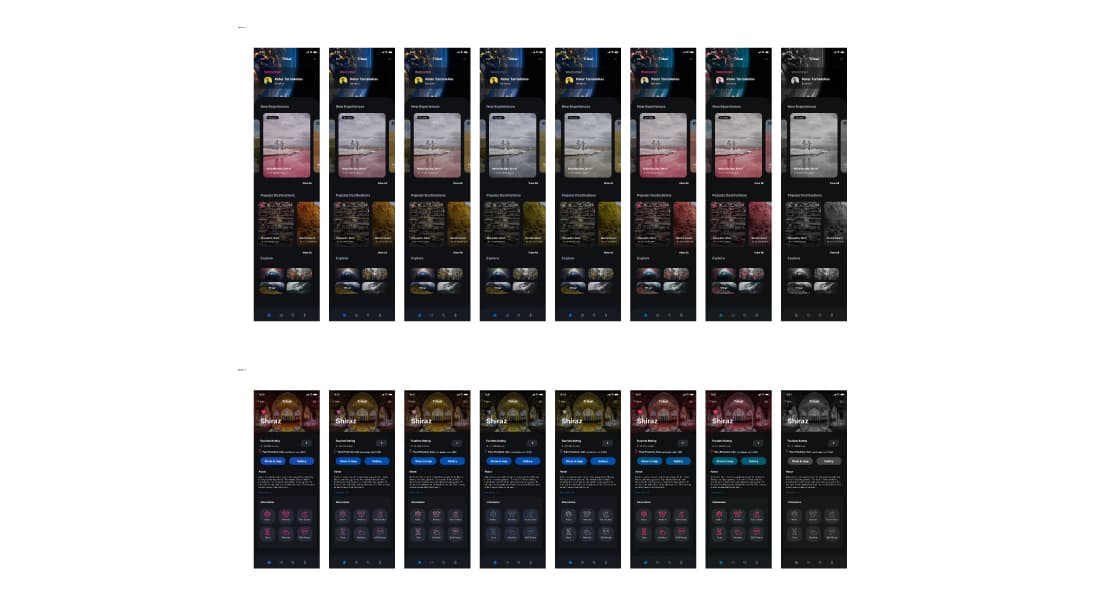
Approximately 8% of men and 0.5% of women worldwide are affected by some form of color blindness. Conducting color blindness tests helps developers modify app designs so that all users, regardless of their visual abilities, can utilize them. By adhering to international standards such as WCAG (Web Content Accessibility Guidelines), applications can be made accessible to all users, including those with color blindness, thereby attracting a larger audience. For this reason, efforts have been made to use images and colors with appropriate contrast in page designs.
Examples of color blindness tests from the app pages, from left to right:
Protanomaly: Makes red somewhat resemble green.
Deuteranomaly: Makes green somewhat resemble red.
Protanopia: Complete blindness to red-green colors.
Deuteranopia: Complete blindness to red-green colors.
Tritanomaly: Confuses blue-green, purple-red, and yellow-pink colors.
Tritanopia: Tritanomaly plus reduced brightness of colors.
Achromatopsia: Complete color blindness (total color vision deficiency).
Results
Market Value
In recent years, there has been a growing demand for travel experiences that are not only enjoyable but also benefit the environment and local communities. By connecting tourists with local tour guides, the app supports economic growth in small towns and villages, creating long-term income opportunities for local households which aligns with SDG 8's goal of "Decent Work and Economic Growth," ensuring sustainable livelihoods through tourism.
Sustainable Impact
By promoting eco-tourism, this app helps preserve unique ecosystems and cultural traditions that may be threatened by mass tourism. For instance, in countries like Iran, eco-tourism can play a vital role in conserving the rich biodiversity of its landscapes, from the lush forests of the north to the arid deserts of the central plateau. It also helps protect traditions and handicrafts that are an integral part of local culture and heritage.
Social Impact
The app also provides a platform for local communities to share their knowledge and stories, offering tourists an authentic experience while generating income for local people. This economic empowerment can further encourage communities to preserve their natural and cultural resources, creating a positive cycle in which conservation efforts are continuously supported by tourism revenues.